


How to Create Products Your Audience Really Wants
- Rea Weeks
- 2 days ago
- 3 min read

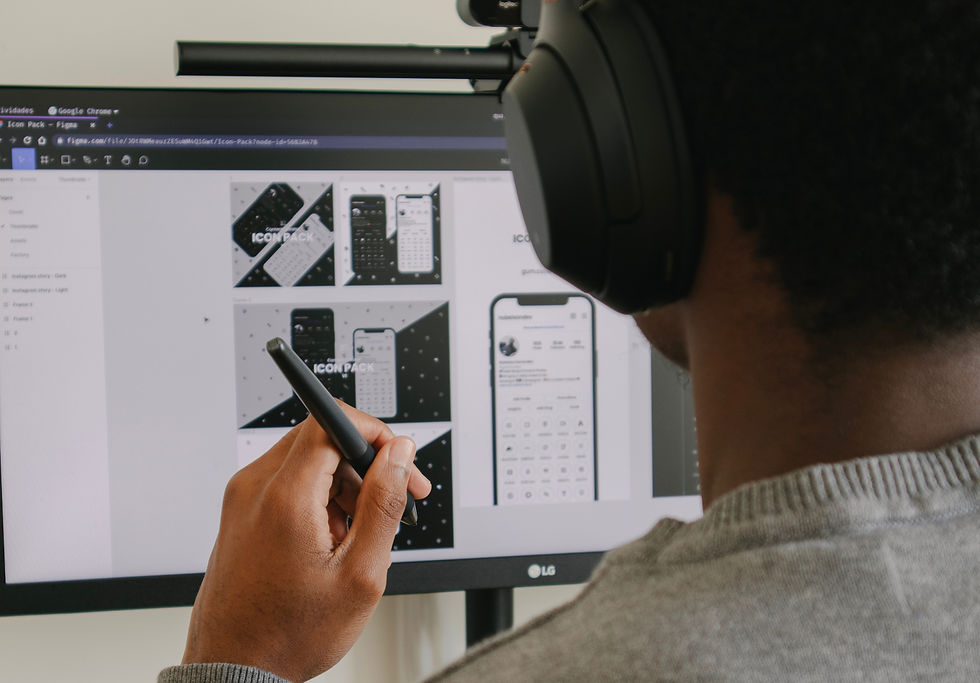
Creating products that people genuinely want isn’t about guessing what might sell—it’s about paying close attention, testing small, and building with your audience instead of for them. When you do that, you reduce the “hope marketing” cycle (make something, post it, cross your fingers) and replace it with a repeatable system you can use again and again.
Below is a simple, practical process you can follow—whether you make digital products, physical products, templates, courses, printables, patterns, or anything in between.
1) Start with a specific person, not “everyone”
A product for “anyone” usually resonates with no one. Instead, define one clear audience slice:
What are they trying to accomplish?
What’s frustrating, time-consuming, or confusing right now?
What does a win look like for them?
What do they already use (tools, platforms, formats)?
Quick exercise: Write one sentence:
“My product is for [type of person] who wants [desired result] without [major pain point].”
Example: “My product is for new Etsy sellers who want cohesive branding without spending hours designing from scratch.”
When your audience is clear, your product decisions get easier—features, style, pricing, even your product name.
2) Find “proof of demand” in everyday signals
You don’t need a massive following to learn what your audience wants. You just need real signals.
Look for:
Repeated questions in comments, DMs, emails, or community groups
Posts that get saved or shared (especially “how-to” posts)
Reviews on similar products (“I wish this came with…”)
Common workarounds (“I made my own spreadsheet because…”)
Search terms people type (Etsy, Pinterest, YouTube, Google, Creative Fabrica, etc.)
Tip: Pay attention to the exact words people use. Those phrases become your product copy later.
3) Choose a problem that’s urgent and common
Some problems are interesting, but not urgent. Others are urgent, but rare. The sweet spot is:
Many people deal with it
It costs them time, money, energy, or confidence
They want a solution now (or soon)
A good “product-worthy” problem often sounds like:
“I keep wasting time on…”
“I don’t know how to…”
“I’m stuck because…”
“I need this to be easier/faster/prettier/more organized…”
When you solve a real, specific problem, selling becomes more like helping.
4) Validate before you build (so you don’t waste weeks)
Validation doesn’t have to be complicated. The goal is simply to confirm: Is this something people will say yes to?
Try one (or more) of these:
Polls: Give 2–4 options and ask what they want most.
“Reply with a word” prompt: Ask them to reply with what they’re struggling with.
Mini-offer pre-sale: Offer an “early access” price to the first 10 buyers.
Prototype preview: Show a rough draft/mockup and ask, “Would this help?”
If you’re building digital products, you can validate with a lightweight version first—one template, one bundle, one variation—then expand based on feedback.
💕 You can find some great resources for digital products on Creativefabrica.
Join CreativeFabrica and get access to millions of graphics, crafts, PDFs, classes, and more! All at an affordable monthly price! If you're a crafter or scrapbooker, this site is for you.
This lavender set can be downloaded for free when you click my affiliate link below!

5) Make the product feel easy to use (this matters more than you think)
A product can be amazing and still fail if it’s confusing. “Ease” is part of the value.
Build in clarity:
A simple “start here” page or quick guide
Clear file naming (no mystery downloads)
A few examples of how to use it
A clean layout with consistent fonts, spacing, and colors
Bonus: a “common mistakes” section
When customers get a quick win, they trust you—and they come back.
6) Position it as a transformation, not a file
People don’t buy “a planner.” They buy a calmer week.
They don’t buy “a template.” They buy a faster workflow.
They don’t buy “a design.” They buy something that looks professional without stress.
When you describe your product, highlight:
Before: what life/work looks like without it
After: what becomes easier, faster, or better with it
Outcome: the result they can expect
Time/effort saved: the hidden value people love
This is how your product becomes the obvious choice.
7) Create a feedback loop so every product gets better
The creators who consistently make “what people want” are not magically gifted—they’re listening.
After you launch, ask:
What part was most helpful?
What was confusing or missing?
What would make this even easier?
What would they want next?
Even a handful of responses can point to your next best product idea (or your next version).
.
🌟 Final Thoughts
Creating products your audience really wants is less about “getting it perfect” and more about building a repeatable rhythm:
Listen → choose one problem → test small → make it easy → improve with feedback.
When you approach product creation like a conversation with your audience, you’ll stop guessing—and you’ll start building with confidence.
Rea 🌻Creator of A Rea of Treasures


Comments